
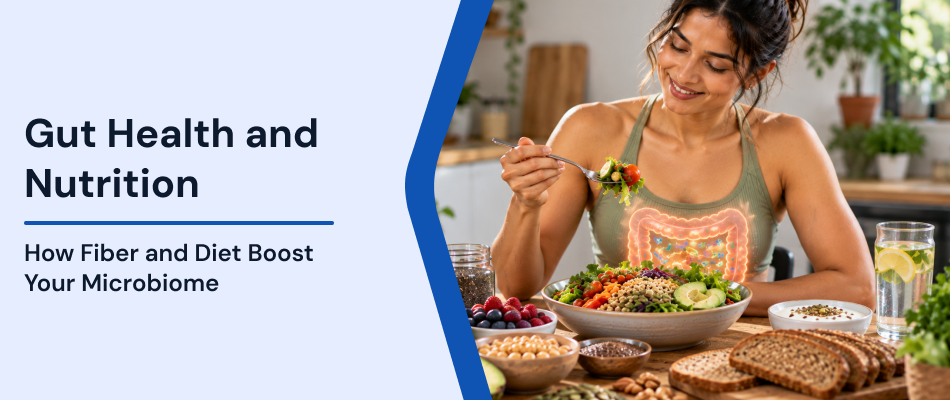
Your gut is much more than just the digestion process. Inside your gut live trillions of tiny organisms, mostly bacteria. These bacteria are like your internal team. They help you digest food. They support your immune system. They even influence your mood and energy levels.
What you eat directly affects these bacteria. Feed them well, and they help you. Ignore them, and problems start. This is the simple truth behind gut health and nutrition, and it is part of preventive health education that everyone should understand.
In this blog, the Institute of Nutrition and Fitness Sciences (INFS) explores the science of fiber, the best foods for your gut, and why prebiotics matter more than you think. As overall, understanding nutrition for gut health and digestion is foundational to sustainable wellness.
How Does Your Gut Health Work?
Your gut is home to beneficial bacteria. These bacteria have jobs. They break down food you cannot digest. They produce chemicals that feed your colon cells. They help your immune system recognize what is safe and what is not.
The role of nutrition in gut microbiome function is critical. When you eat the right foods, your bacteria thrive. When you eat poorly, they suffer. A healthy gut means: :
-
Smooth, regular digestion
-
No bloating or constant discomfort
-
Stable energy levels
-
A strong immune system
-
Better mood and focus
But here is the key: your gut health is unique to you. What works perfectly for one person might not work for another. There is no single "perfect" microbiome. There is only what works for your body.
Why Fiber Is Essential for Gut Health and Digestion
Imagine your gut bacteria are hungry. They want to eat. But they cannot eat the food you eat directly. They need fiber.
Fiber is the part of plant foods your stomach and small intestine cannot break down. It passes right through to your colon, where your bacteria live. There, bacteria ferment the fiber and create special chemicals called short-chain fatty acids.
How does fiber help your gut microbiome? The fatty acids are important. They:
-
Give energy to your colon cells
-
Keep your gut pH balanced
-
Reduce inflammation
-
Strengthen your intestinal wall
-
Support immune function
Understanding how dietary fiber boosts gut microbiome health is essential. Without fiber, your bacteria starve. Without well-fed bacteria, your gut suffers. This is why fiber intake directly correlates with digestive comfort and overall wellness. Most people need 25-35 grams of fiber daily, but the average person eats only 15 grams.
Simple Foods That Help Your Gut
You do not need special supplements. Regular food works better. Here are foods that improve gut microbiome health and are backed by evidence :
Vegetables and Fruits
-
Broccoli, spinach, carrots, sweet potatoes
-
Apples, bananas, berries
-
Avocados (full of fiber and healthy fats)
Legumes and Grains
-
Beans, lentils, chickpeas
-
Oats, brown rice, whole wheat bread
-
Barley
Nuts and Seeds
-
Almonds, walnuts
-
Chia seeds, flax seeds
-
Pumpkin seeds
Fermented Foods
-
Plain yogurt
-
Sauerkraut, kimchi
-
Kefir, tempeh
These foods are not exotic. You probably already buy them regularly. The difference is making them a bigger part of your meals instead of occasional additions. Choosing foods that improve gut microbiome health is practical and most often quite affordable.
Prebiotics vs Probiotics for Gut Health : What Is the Difference?
People often ask about probiotics and prebiotics. They sound similar but work differently.
Prebiotics are fiber that feeds your existing bacteria. Think of them as fertilizer for your gut garden. Examples: onions, garlic, bananas, oats, beans.
Probiotics are live bacteria themselves. Think of them as new plants for your garden. Examples: yogurt, sauerkraut, kimchi, kefir.
Here is the honest truth: your gut already has plenty of bacteria. You do not need to buy expensive probiotic supplements. What you need is to feed the bacteria you already have with enough fiber. That is it.
Fermented foods are nice additions. They taste good and have some benefits. However, fiber is the main thing.
Macronutrients and Gut Microbiome Health
Your bacteria need:
Carbohydrates (Fiber-Rich)
-
Whole grains, beans, vegetables
-
These are fermented by bacteria into beneficial compounds
Proteins
-
Support bacterial cell structures
-
Help produce neurotransmitters in your gut
-
Sources: legumes, fish, eggs, nuts
Healthy Fats
-
Support nutrient absorption
-
Reduce inflammation
-
Sources: olive oil, avocados, fatty fish
A balanced diet with all three macronutrient groups supports optimal bacterial diversity and function.
Real Dietary Patterns That Work
Mediterranean-style eating works well:
-
Lots of vegetables and fruits
-
Whole grains and beans
-
Nuts and olive oil
-
Some fish and chicken
-
Limited processed foods
Studies show that people who eat this way have healthier guts as they age. They have less inflammation. They have more energy. They avoid many digestive problems.
Plant-based eating works, but only if done right:
-
Eating beans, lentils, whole grains, vegetables, and fruits is great
-
Eating mostly refined bread, pasta, and processed vegan products is not
The quality of plant foods matters. Whole foods beat processed foods, whether you eat meat or not.
If you are interested in a gut health nutrition plan for weight loss, understand that healthy gut bacteria support metabolic function. A diet rich in fiber, whole grains, and vegetables naturally supports sustainable weight management while improving digestive health. The bacteria in your gut influence how you absorb and utilize nutrients. Feed them well, and they support your metabolic goals.
Why Ultra-Processed Foods Hurt Your Gut
Processed foods are convenient. But they damage your gut bacteria.
Ultra-processed foods contain:
-
Refined starches (your bacteria cannot ferment these well)
-
Added sugars (feed harmful bacteria)
-
Few nutrients
-
Chemical additives
When you eat mostly processed foods, you starve your beneficial bacteria. Harmful bacteria multiply instead. Your gut becomes inflamed. Digestion suffers. You feel bloated and uncomfortable.
The good news: you do not have to be perfect. Just eat more whole foods at your main meals. Replace snacks like chips with fruit and nuts. Cook with beans and vegetables instead of reaching for packaged meals.
Small changes compound into big results.
How to Add More Fiber Without Feeling Terrible
Many people try to eat more fiber overnight and feel awful, bloating, gas, stomach discomfort. This is avoidable.
Your bacteria need time to adjust. Add fiber gradually:
Week 1: Add one vegetable portion to one meal daily
Week 2: Switch one snack to fruit or nuts
Week 3: Have beans or lentils once or twice
Week 4: Add a whole grain swap (brown rice instead of white, whole wheat bread instead of white)
Also drink more water. Fiber needs water to work properly.
Note: Seasonal changes like monsoon rains can slow your digestion temporarily. For a detailed guide on managing gut health during monsoon season, read our blog on the same.
If you have serious digestive issues or certain health conditions, talk to a professional before making big dietary changes. But for most people, gradual increases work beautifully.
Key Takeaways
-
Your gut bacteria need fiber to thrive. Without it, they starve and your digestion suffers.
-
Regular whole foods beat expensive supplements. Beans, vegetables, fruits, and whole grains are all you need.
-
Slow, gradual changes work better than drastic shifts. Give your gut time to adjust.
-
Fermented foods are nice but not necessary if you eat enough fiber.
-
Processed foods damage your gut bacteria. Replace them slowly with whole foods.
-
Your gut health is personal. What works for someone else might not work for you.
-
Small dietary changes create big health improvements over time.
Nutrition Education and Professional Guidance
Best Nutrition and Fitness Certification Online
If you are interested in learning nutrition at a professional level, INFS offers professional health and fitness certifications that cover gut health comprehensively. A clinical nutrition course teaches the science behind microbiome health, dietary interventions, and personalized nutrition strategies. Many fitness professionals and health coaches complete these certifications to better serve their clients.
INFS offers:
-
Certified Nutritionist Course – Covers microbiome science, dietary protocols, and preventive health
-
Professional Diploma in Nutrition, Exercise and Preventive Health – Comprehensive training in gut-brain axis, nutritional assessment, and functional nutrition
-
Women’s Health and Wellness Course – Includes specialized nutrition for hormonal and digestive health
Frequently Asked Questions
Bloating after meals, irregular bowel movements, persistent stomach discomfort, frequent infections, unexplained brain fog, chronic fatigue, and skin issues like acne or eczema. If you experience most of these, your gut likely needs attention. See a healthcare professional if symptoms persist.
The most effective daily anti-inflammatory gut foods are fatty fish like salmon (omega-3s), berries (polyphenols), olive oil, turmeric, and ginger. These reduce inflammation in your gut lining and feed beneficial bacteria. Eating at least one of these daily makes a measurable difference in digestion and energy within 2-3 weeks.
Q20: How do I know when my gut microbiome has actually improved?
You’ll notice: regular bowel movements without bloating, more stable energy throughout the day, clearer skin, better focus, and less stomach discomfort after meals. These improvements typically appear after 4-6 weeks of consistent fiber intake. Severe symptoms may take 8-12 weeks.
Disclaimer
This article is for educational purposes only and is not a substitute for professional medical advice. Always consult your doctor, registered dietitian, or certified fitness professional before starting any new exercise program or making significant dietary changes, especially if you have pre-existing health conditions, injuries, or are on medications.
References:
1. de la Cuesta-Zuluaga J, Patil KR, Maier L. Drug–microbiome–host interactions: antimicrobial effects of non-antibiotic compounds. Nat Rev Gastroenterol Hepatol. 2026 Sep 14;1–16. doi:10.1038/s41575-026-01258-w
2. What do we mean by gut health? Nat Rev Gastroenterol Hepatol. 2026 May;23(5):373–373. doi:10.1038/s41575-026-01208-6
3. Whelan K, Staudacher HM. Fibre is good for the microbiome: but what is the evidence? Lancet Gastroenterol Hepatol. 2022 Nov 1;7(11):988. doi:10.1016/S2468-1253(22)00310-7 PubMed PMID: 36208636.
4. Aslam H, Trakman G, Dissanayake T, Todd E, Harrison P, Alby C, et al. Dietary interventions and the gut microbiota: a systematic literature review of 80 controlled clinical trials. J Transl Med. 2026 Jan 7;24:39. doi:10.1186/s12967-025-07428-9 PubMed PMID: 41501909; PubMed Central PMCID: PMC12781466.
5. Wolter M, Grant ET, Boudaud M, Steimle A, Pereira GV, Martens EC, et al. Leveraging diet to engineer the gut microbiome. Nat Rev Gastroenterol Hepatol. 2021 Dec;18(12):885–902. doi:10.1038/s41575-021-00512-7
6. So D, Whelan K, Rossi M, Morrison M, Holtmann G, Kelly JT, et al. Dietary fiber intervention on gut microbiota composition in healthy adults: a systematic review and meta-analysis. Am J Clin Nutr. 2018 Jun 1;107(6):965–83. doi:10.1093/ajcn/nqy041
7. Vinelli V, Biscotti P, Martini D, Del Bo’ C, Marino M, Meroño T, et al. Effects of Dietary Fibers on Short-Chain Fatty Acids and Gut Microbiota Composition in Healthy Adults: A Systematic Review. Nutrients. 2022 Jun 21;14(13):2559. doi:10.3390/nu14132559 PubMed PMID: 35807739; PubMed Central PMCID: PMC9268559.
8. Inoue R, Suzuki K, Takaoka M, Narumi M, Naito Y. Effects of Dietary Fiber Supplementation on Gut Microbiota and Bowel Function in Healthy Adults: A Randomized Controlled Trial. Microorganisms. 2025 Sep 5;13(9):2068. doi:10.3390/microorganisms13092068 PubMed PMID: 41011400; PubMed Central PMCID: PMC12471990.
9. Ghosh TS, Rampelli S, Jeffery IB, Santoro A, Neto M, Capri M, et al. Mediterranean diet intervention alters the gut microbiome in older people reducing frailty and improving health status: the NU-AGE 1-year dietary intervention across five European countries. Gut. 2020 Jul;69(7):1218–28. doi:10.1136/gutjnl-2019-319654 PubMed PMID: 32066625; PubMed Central PMCID: PMC7306987.
10. Kimble R, Gouinguenet P, Ashor A, Stewart C, Deighton K, Matu J, et al. Effects of a mediterranean diet on the gut microbiota and microbial metabolites: A systematic review of randomized controlled trials and observational studies. Crit Rev Food Sci Nutr. 2023 Oct 25;63(27):8698–719. doi:10.1080/10408398.2022.2057416 PubMed PMID: 35361035.
11. Rondinella D, Raoul PC, Valeriani E, Venturini I, Cintoni M, Severino A, et al. The Detrimental Impact of Ultra-Processed Foods on the Human Gut Microbiome and Gut Barrier. Nutrients. 2025 Feb 28;17(5):859. doi:10.3390/nu17050859 PubMed PMID: 40077728; PubMed Central PMCID: PMC11901572.