
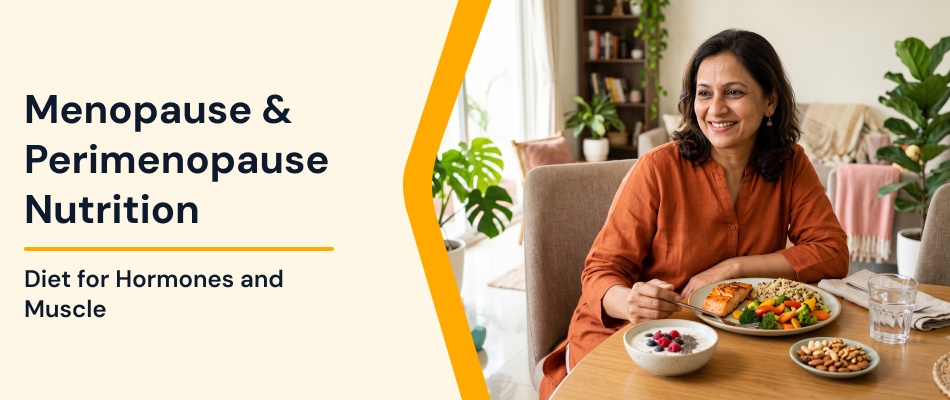
We hear the word menopause so often discussed on social media and different platforms today. Menopause is a natural stage of life, and it can bring real major changes. Hormone levels shift, and many women notice changes in sleep, body shape, muscle strength and energy.
The right eating habits can help you protect your muscles, support your bones and feel stronger along the journey of menopause.
. The Institute of Nutrition and Fitness Sciences (INFS) in this blog covers menopause and perimenopause nutrition and explains how everyday eating, strength training and bone-friendly habits can support women’s health.
What Is Perimenopause and Menopause?
Perimenopause means “around menopause.” It is the transition that leads up to menopause. It usually starts in your 40s and can last 2 to 10 years. During this time, hormone levels rise and fall unpredictably, and your periods may become irregular, heavier, lighter or skipped. You can still often become pregnant during this stage.
Menopause is the point when your periods end permanently. It is confirmed after 12 months in a row without a period, when there is no other cause. Most women reach menopause between 45 and 55 years old, with the average around 51 or 52.
The years after this point are called postmenopause. Bone, muscle and heart health remain important throughout this stage.
Every womans experience in these 2 phases is different. Some have hot flushes, night sweats, poor sleep or mood changes. Others have very few symptoms. If symptoms are affecting your sleep, work or daily life, talk to your doctor. Nutrition supports overall health, but it isnt a treatment for every symptom.
Why Muscle and Bone Health Matter In Perimenopause and Menopause
As we age, and as hormone levels change, muscle mass and strength can decline. Muscles help you move, keep your balance and stay independent. Bones also need steady support from food and regular weight-bearing activity.
Thus the aim should be strength, mobility and good health through midlife and beyond.
Protein Intake for Menopause Muscle Loss
Protein is what your body uses to repair and maintain muscle. Rather than eating most of your protein at dinner, try including a protein-rich food at every main meal.
Good options include:
-
Dal, rajma, chickpeas and other beans
-
Soy foods and tofu
-
Paneer, milk and curd
-
Eggs, fish or chicken, depending on your preferences
How much protein you need depends on your body size, health, activity level and overall food intake. If you do strength training, paying attention to protein is especially helpful. Supplements usually arent needed if your meals are varied. If you have kidney disease or another condition that affects protein intake, check with your doctor before making big changes.
Importance of Carbs and Fats
Carbohydrates are important.. Whole grains, oats, rice, roti, potatoes, fruit and pulses give you energy for daily life and exercise. Choosing high-fibre options more often keeps you full and supports digestion.
Nuts, seeds, olive or mustard oil and fish can fit well into a balanced diet. Fats also help your body absorb certain vitamins. Variety and sensible portions matter more than cutting out whole food groups.
Calcium and Vitamin D for Bone Health
Bone loss can speed up around menopause, so bone-friendly eating matters.
Calcium-rich foods include:
-
Milk, curd and paneer
-
Calcium-fortified plant milks
-
Calcium-set tofu
Vitamin D helps your body absorb calcium, but food sources are limited, so some women may need a supplement. Ask your doctor before starting one, since more isnt always better.
Phytoestrogens for Menopause Symptoms
Phytoestrogens are plant compounds found in soy foods such as tofu, soy milk and soybeans. Some research looks at whether they might ease menopause symptoms, but results vary from person to person, and products differ a lot.
Treat soy foods as healthy everyday foods rather than a guaranteed treatment for hot flushes. If youre considering phytoestrogen supplements, check with your healthcare provider first.
What Nutrients Are Needed During Menopause?
Focus on these:
-
Protein for muscle repair
-
Calcium and vitamin D for bones
-
Fibre from vegetables, fruit, pulses and whole grains
-
Unsaturated fats from nuts, seeds and oils
-
Plenty of fluids through the day
Most of these come from a varied diet. Supplements are useful only when your food intake, test results or doctor suggest a need.
What Not to Eat During Menopause?
Theres no single list of foods to avoid. Instead, reduce habits that matter most for long-term health:
-
Frequent sugary drinks
-
Excess salt
-
Highly processed snacks
-
Foods high in saturated or trans fats
Enjoy the foods you like in sensible portions. Strict food rules often backfire.
Strength Training Works Best With Good Nutrition
Strength training is one of the most effective ways to protect muscle. Body-weight exercises, resistance bands, free weights or machines all work. Start at a comfortable level, focus on technique, and increase gradually.
Add walking or other weight-bearing activity, plus balance exercises if they suit you. If you have osteoporosis, joint pain or another health condition, ask a qualified professional to adapt your plan.
To see how hormones affect training at every life stage, read this blog
Be Cautious With Hormone Promises
Be wary of products that promise to "balance hormones," detox your body, burn fat or cure menopause. Ingredients, doses and safety can vary, and some products can interact with medicines. Check with a healthcare professional before starting anything new.
A Simple Menopause Diet Plate
A practical plate includes:
-
A protein food, like dal, paneer, eggs or tofu
-
A high-fibre carb, like roti, brown rice or oats
-
Vegetables or fruit
-
A source of healthy fat, like nuts or olive oil
For example:
-
Breakfast: Oats with milk or soy drink, nuts and fruit
-
Lunch: Dal, roti or rice, vegetables and curd
-
Dinner: Tofu or paneer with vegetables and grains
-
Snacks: Fruit, roasted chana or a handful of nuts
Treat these as a guide, not rigid rules. Your appetite, budget, culture and health needs all shape what works for you.
Conclusion
Menopause is a natural stage of life, and it is not necessary to have a special diet to get through it well. Steady meals with enough protein, fibre-rich foods, calcium and regular strength training go a long way.
-
Include a protein food at every main meal to support your muscles
-
Choose fibre-rich carbs, vegetables, fruit and healthy fats most days
-
Build strength training and bone-friendly foods into your routine
-
Talk to your doctor about persistent symptoms, supplements, or any bleeding after menopause
Institute of Nutrition and Fitness Sciences (INFS) promotes this kind of preventive health education, which focuses on realistic habits rather than quick fixes. To build this knowledge further, you can start with the women’s health and wellness course or the Diploma in Nutrition, Exercise and Preventive Health. Both are fitness and nutrition courses online that can help you put these habits into practice.
Disclaimer
The information in this blog is for general educational purposes only. It is not a substitute for professional medical advice, diagnosis or treatment. Always speak with a qualified doctor or healthcare professional before starting, stopping or changing any diet, supplement, exercise programme or hormone-related treatment, especially if you have an existing medical condition, take regular medication or notice bleeding after menopause.
Frequently Asked Questions
1.What is a good diet plan for menopause?
A good plan is a balanced plate at each meal: a protein food, a high-fibre carbohydrate, vegetables or fruit, and a healthy fat. Focus on variety, regular meals and water, and add strength training. A dietitian can personalize the plan for your needs.
2.What is the best nutrition for perimenopause?
The basics are enough protein, fibre-rich carbs, vegetables and fruit, calcium and vitamin D, and regular strength training. Building these habits early supports your muscles and bones before symptoms become strong.
3.What is the average age at which perimenopause starts?
Perimenopause usually begins in a womans 40s, but timing varies widely. Some women notice changes earlier and others later. Talk to your doctor if you have concerns about early changes.
4.What nutrients are needed during menopause?
Protein, calcium, vitamin D, fibre, unsaturated fats and fluids are the key nutrients. Most come from a varied diet, and supplements should only be taken when a healthcare professional recommends them.
5.What not to eat when menopause?
Theres no single food to avoid. Limit frequent sugary drinks, excess salt, highly processed snacks and foods high in saturated or trans fats, while keeping the rest of your diet varied and enjoyable.
6.What are 5 estrogen foods to avoid?
No specific list of foods reliably raises or lowers estrogen in a way that makes menopause easier, so a list of "estrogen foods to avoid" isnt a useful guide. Soy foods are a nutritious option for most women. Focus on the overall pattern of your diet rather than cutting out single foods.
7.Can soy foods help with menopause symptoms?
Soy foods can be part of a balanced diet, but they arent a guaranteed treatment for hot flushes or other symptoms. Discuss supplements or persistent symptoms with a healthcare professional.
References
-
https://www.nia.nih.gov/health/menopause/what-menopause National Institute on Aging. (2021). What is menopause?
-
https://www.womenshealth.gov/menopause/menopause-symptoms-and-relief : Office on Women’s Health. (2021). Menopause symptoms and relief.
-
https://www.nhs.uk/conditions/menopause/ National Health Service. (2023). Menopause.
-
https://pubmed.ncbi.nlm.nih.gov/37252752/ The North American Menopause Society. (2023). Nonhormone therapy position statement of The North American Menopause Society.
-
https://ods.od.nih.gov/factsheets/Calcium-HealthProfessional/
National Institutes of Health, Office of Dietary Supplements. Calcium: Fact sheet for health professionals. -
https://ods.od.nih.gov/factsheets/VitaminD-HealthProfessional/
National Institutes of Health, Office of Dietary Supplements. Vitamin D: Fact sheet for health professionals. -
https://www.who.int/publications/i/item/9789240015128 : World Health Organization. (2020). WHO guidelines on physical activity and sedentary behaviour.
-
https://www.osteoporosis.foundation/health-professionals/prevention/nutrition: International Osteoporosis Foundation. Nutrition.