
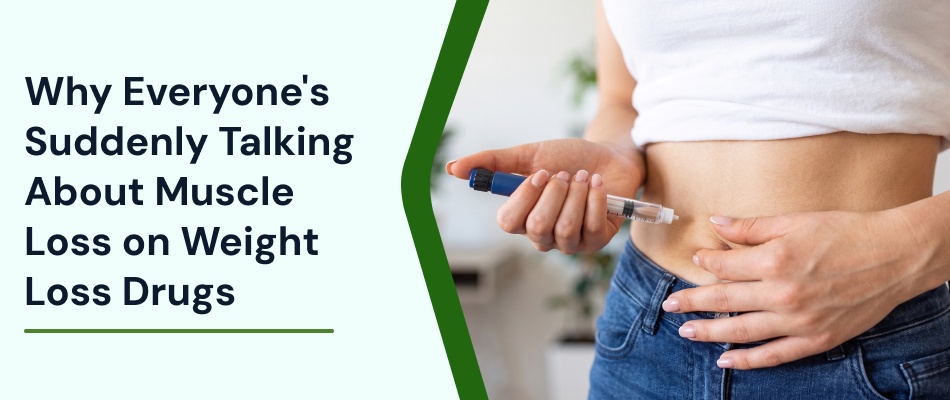
Clinical trials show semaglutide and tirzepatide help patients lose significant weight with lifestyle changes. Results match bariatric surgery. They improve blood sugar, lower heart disease risk, and improve quality of life.
However, concerns about muscle loss on these medications have emerged. Research shows a balanced picture. The real question is not whether muscle loss happens, but how much, who is at risk, and how to prevent it.
The Institute of Nutrition and Fitness Sciences (INFS) sheds some light on this topic today.
Understanding GLP-1 Muscle Loss
Obesity is a chronic disease influenced by genetic, hormonal, environmental, behavioral, and metabolic factors. Traditional calorie restriction and exercise produce modest short-term results with weight regain common.
GLP-1 medications work by controlling hunger and fullness signals in your body. They copy a natural hormone called GLP-1 that your body already makes. These medications affect brain areas that control appetite, slow stomach emptying, and help your pancreas release insulin better. This reduces how much you eat without needing willpower.
Tirzepatide works even better by activating both GLP-1 and GIP receptors, causing greater weight loss. Large clinical trials show these medications reduce body weight and improve blood sugar, blood pressure, cholesterol levels, and heart health.
This pattern, where lean mass decreases but fat decreases more, is not unique to GLP-1 medications. The same occurs with calorie restriction, intensive exercise programs, and bariatric surgery. Understanding this helps reduce unnecessary alarm about weight loss medications.
Why Are People Concerned? Understanding the Context
Early body composition studies showed that approximately 1/4 to 1/3 of weight loss came from lean mass, which generated widespread media attention and concern. Headlines warning of "muscle wasting" and viral discussions on social media raised important questions about long-term effects.
However, this requires careful interpretation because lean mass includes water and glycogen, not just muscle. The concern is understandable because skeletal muscle plays a central role in maintaining physical function, mobility, metabolic health, and healthy aging. Muscle is crucial for everyday function, glucose control, and maintaining independence, especially with aging.
The real question is not whether lean mass decreases, but how much, who is at risk, and how to prevent it. Understanding which reductions are meaningful matters more than the raw numbers alone.
Weight Loss Drugs and Muscle: The Real Story
What Is Lean Body Mass?
Many people think lean body mass and skeletal muscle are the same thing. They are not. Lean mass includes muscle, organs, connective tissue, blood, and water stored in your cells. Most weight loss studies use DXA scans, which measure fat and lean mass. However, these scans cannot tell the difference between actual muscle and other lean tissues.
During rapid weight loss, your body uses up stored carbohydrate (glycogen) and loses water along with it. This water loss shows up as a decrease in lean body mass on scans. But this does not mean you actually lost real muscle.
Can Your Muscles Get Healthier While Shrinking?
When you lose weight, improvements in liver fat and reductions in body water also affect body composition measurements. These changes do not mean your muscles are damaged.
Interestingly, weight loss can improve muscle quality even when you lose a small amount of lean mass. People with obesity often have fat stored inside their muscles, a condition called myosteatosis. Weight reduction removes this internal fat, improves how your cells function, and makes your muscles work better. This means your muscles can become healthier even if they are slightly smaller.
Understanding this difference is important for anyone worried about muscle loss on GLP-1 medications.
Clinical Trial Results: What Really Happened to Muscle?
STEP Trial Results
The STEP trial tested semaglutide in adults with obesity over 68 weeks. Participants lost approximately 15% of their body weight on average. Body composition tests showed most of the weight loss came from fat, not muscle. Lean mass did decrease, but fat mass decreased much more. This is important: the proportion of lean tissue relative to total body weight actually improved because fat loss was so much greater than muscle loss.
SURMOUNT Trial Results
The SURMOUNT trials tested tirzepatide and showed even better results. Participants lost more than 20% of body weight on average. These studies found significant reductions in belly fat (visceral fat), better insulin sensitivity, and improvements in heart health markers. Again, while some lean mass declined alongside total weight loss, fat made up the vast majority of weight lost.
Most importantly: Current research does not show clinically meaningful losses in muscle strength or physical performance among healthy adults taking GLP-1 drugs. These findings should be viewed in context with the overall improvements in metabolic health, not just as negative side effects.
Who Needs to Worry About Muscle Loss?
Older Adults
Older adults face greater risk because aging naturally causes muscle loss, weakness, and reduced physical function: a condition called sarcopenia. When GLP-1 medications reduce hunger, older adults may eat less protein without realizing it. This combination of natural muscle loss from aging plus reduced protein intake increases the risk of losing more muscle. If dietary quality is maintained, especially adequate protein, this risk can be minimized.
People With Chronic Conditions
People with chronic illness, frailty, prolonged inactivity, advanced diabetes, chronic kidney disease, or inflammatory conditions may struggle more to preserve muscle during weight loss. Those following very low-calorie diets or not eating enough protein may lose proportionally more muscle mass.
For these groups, doctors increasingly recommend monitoring how muscles actually work, not just scale weight. This includes tests like grip strength, walking speed, and ability to stand from a chair. These functional tests give a clearer picture than body composition measurements alone.
How to Prevent Muscle Loss on Weight Loss Medications
1.Prioritize Protein Intake on GLP-1 Medications
Adequate protein intake on GLP-1 medications supports muscle protein synthesis during periods of negative energy balance. Many experts recommend approximately 1.2-1.6 grams of protein per kilogram of body weight per day during intentional weight loss. Distributing protein evenly across meals may further enhance muscle protein synthesis and help prevent muscle loss on weight loss drugs.
2.Incorporate Resistance Training
Resistance training remains the most effective intervention for preventing muscle loss on Ozempic and other weight loss medications. Progressive resistance training stimulates muscle protein synthesis, improves neuromuscular function, and helps maintain physical performance even during calorie restriction. Two to three sessions per week targeting major muscle groups are generally recommended.
3.Avoid Excessively Rapid Weight Loss
Although substantial weight loss offers important health benefits, severe calorie restriction without adequate nutrition may accelerate lean body mass loss with weight loss drugs. Balanced nutrition and regular exercise remain the preferred long-term strategy for sustainable weight management while protecting muscle.
4.Focus on Function Rather Than Weight Alone
Monitoring muscle strength, endurance, and mobility provides more meaningful assessment of health than body weight. Improvements in physical performance often occur despite modest reductions in lean mass.
Key Takeaways
- Some reduction in lean tissue accompanies weight loss regardless of intervention used
- Lean body mass loss with weight loss drugs includes water and glycogen, not just muscle
- This pattern is not unique to GLP-1 medications; it occurs with diet and exercise too
- Modest decreases in lean tissue do not necessarily translate into impaired strength
- For most individuals, metabolic benefits outweigh concerns regarding moderate lean mass reduction
- Older adults and those with chronic illness require closer monitoring
- Protein intake on GLP-1 medications is critical for muscle preservation
- Resistance training is the most effective intervention during weight loss
- Proper nutrition and exercise matter more than medication choice alone
Learn More About Healthy Weight Management
Explore INFSs Certified Nutritionist Course and Certified Personal Trainer program to understand comprehensive approaches to weight management, muscle preservation, and metabolic health at infs.com/courses
Frequently Asked Questions
- What I wish I knew before starting GLP-1?
Understanding that muscle loss on weight loss drugs includes water and glycogen loss, not just muscle, is critical. Work with healthcare professionals to maintain adequate protein intake on GLP-1 medications and perform resistance training to preserve functional muscle strength. Focus on preventing muscle loss on Ozempic through consistent nutrition strategies.
- How much weight can you lose on GLP-1 in 3 months?
Clinical trials show substantial weight loss varies individually. Most patients experience meaningful reductions within this timeframe, but results depend on dosage, adherence, and lifestyle modifications combined with the medication. Understanding GLP-1 muscle loss concerns helps you set realistic expectations.
- Who should not take GLP-1 drugs?
Individuals with personal or family history of thyroid cancer, multiple endocrine neoplasia, severe pancreatitis, or diabetic retinopathy should not take these medications. Always consult a qualified healthcare provider before starting any medication.
- What happens if you stop taking GLP-1?
Weight regain often occurs after discontinuation because the underlying physiological mechanisms defending body weight remain active. Sustained lifestyle modifications become essential for long-term weight management after stopping the medication.
- How much protein should I eat daily on GLP-1 medications?
Aim for 1.2-1.6 grams of protein per kilogram of body weight daily to prevent muscle loss on weight loss drugs. Distribute protein evenly across meals for optimal muscle preservation. Consult a nutritionist for personalized needs based on age, activity level, and kidney function.
- Whats the best type of exercise to prevent muscle loss on weight loss drugs?
Resistance training is most effective for preserving muscle while taking GLP-1 medications. Perform two to three sessions per week targeting major muscle groups, combined with aerobic exercise for best results.
- Can I tell if Im losing muscle or just fat?
Lean body mass loss includes water and glycogen, not just muscle. Functional tests like handgrip strength and chair-rise tests better indicate actual muscle loss than scale weight or body composition scans.
- Is protein supplementation necessary while taking GLP-1?
Protein supplements arent necessary if you meet daily requirements through whole foods. However, reduced appetite from GLP-1 may make adequate protein intake challenging, so supplements can help prevent muscle loss on weight loss drugs.
DISCLAIMER
This article is for educational purposes only and should not replace professional medical advice. Always consult a qualified healthcare provider or certified nutrition specialist before starting or stopping any medication, or making significant changes to your diet and exercise routine.
REFERENCES
WHO Obesity Fact Sheet (World Health Organization)
https://www.who.int/
Semaglutide STEP 1 Body Composition Study (New England Journal of Medicine)
https://www.nejm.org/
Tirzepatide SURMOUNT-1 Trial (New England Journal of Medicine)
https://www.nejm.org/doi/full/10.1056/NEJMoa2206038
Clinical Relevance of Weight Loss-Induced Muscle Loss (JAMA)
https://pubmed.ncbi.nlm.nih.gov/38829659/
Body Composition Changes with GLP-1 Drugs (Diabetes, Obesity and Metabolism)
https://dom-pubs.onlinelibrary.wiley.com
Muscle Quality & Fat Infiltration (Myosteatosis) Study (Cell Metabolism)
https://www.cell.com
Sarcopenia & Muscle Health Diagnosis (Age and Ageing)
https://academic.oup.com
Low Muscle Mass in Chronic Disease (The Lancet)
https://www.thelancet.com
Strategies to Preserve Lean Mass on GLP-1s (PubMed)
https://pubmed.ncbi.nlm.nih.gov/38937282/
Protein & Resistance Training Meta-Analysis (British Journal of Sports Medicine)
https://bjsm.bmj.com/