
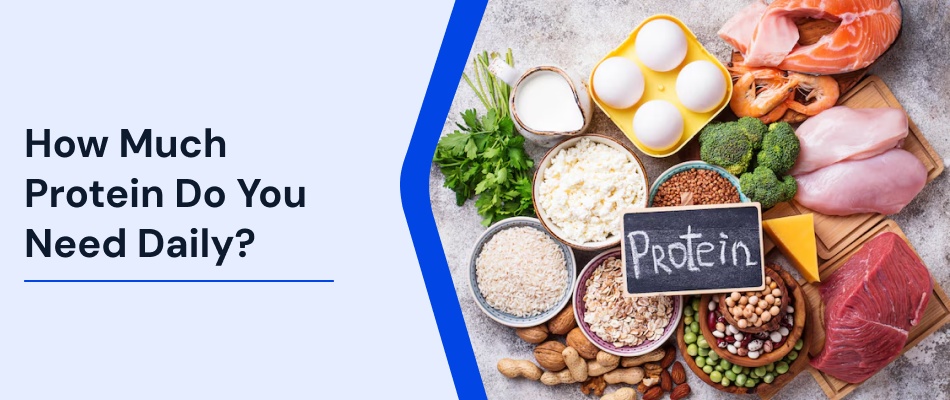
Protein is very important. It does a lot more than build muscle. It makes enzymes, hormones, and antibodies. It helps you heal, fight illness, and hold on to lean mass as you age. At the Institute of Nutrition and Fitness Sciences (INFS), this is one of the first things scholars learn in nutrition science.
Yet one question keeps causing confusion. How much protein do you need daily? Popular media pushes very high-protein diets or repeats the idea that your body uses only 20 to 30g at a time.
The evidence tells us something more useful. Protein needs are individual. They shift with age, body weight, activity, and health goals. This guide breaks down real numbers and clears up the protein absorption per meal myth.
Protein Is More Than One Simple Number
The Recommended Dietary Allowance for protein is 0.8 g/kg/day. This value exists to prevent deficiency in healthy sedentary adults. It keeps you in nitrogen balance.
But this number provides us with the base and not the ceiling limit. It is the minimum to avoid deficiency. It is not the amount that supports strength, performance, or healthy ageing.
Several life stages raise your protein needs. Growth, pregnancy, ageing, illness, and regular exercise all increase demand. This is why modern nutrition favours individual targets over one universal figure.
Matching the right source to the right person is a coaching skill. The INFS Diploma in Nutrition and Fitness covers this in depth, from protein quality scoring to real client meal planning.
How Much Protein Do You Need Daily by Activity Level
So how much protein do you need daily in practice? Current evidence supports these ranges for most healthy people.
- Sedentary healthy adults: 0.8 g/kg/day
- Recreationally active adults: 1.0 to 1.2 g/kg/day
- Endurance athletes: 1.2 to 1.6 g/kg/day
- Resistance-trained individuals: 1.6 to 2.2 g/kg/day
- Older adults over 65: 1.0 to 1.2 g/kg/day, higher during illness
- Weight loss with muscle preservation: 1.6 to 2.4 g/kg/day
These numbers reflect the higher amino acid demands of muscle remodelling. They also account for recovery and the prevention of age-related muscle loss.
Does Protein Intake Above 25g Get Wasted? What Science Actually Says
After you eat protein, amino acids in your blood stimulate muscle protein synthesis. This is the process that repairs and builds skeletal muscle. It rises fast after a meal.
But muscle protein synthesis eventually plateaus. This happens even when amino acids are still available. Scientists call this the muscle-full effect.
Early studies suggested 20 to 25g maximally stimulated synthesis in young adults. This led many to believe extra protein was wasted. That view is too simple.
Higher doses do increase amino acid oxidation. Even so, they still support whole-body protein metabolism and tissue repair. Your body does not discard protein above some fixed threshold.
The Protein Absorption Per Meal Myth
One of the most stubborn ideas in sports nutrition is the protein absorption per meal myth. It claims you can only absorb 20 to 30g of protein in one sitting. The science says otherwise.
Your intestine absorbs almost all the protein you eat. Absorption is not the real limit. The better question is how much protein optimally stimulates muscle protein synthesis at one time.
That answer depends on several factors.
- Body size and lean body mass
- Age
- Exercise done before the meal
- Protein source and digestibility
- Carbohydrate and fat in the meal
- Your overall daily intake
Mixed meals digest slower than isolated protein powders. This gives you prolonged amino acid availability. That steady release can sustain anabolic responses for hours, which further dismantles the protein absorption per meal myth.
Optimal Protein Distribution Throughout the Day
Spreading protein across meals beats loading it all at dinner. This is the core of optimal protein distribution. It keeps muscle protein synthesis active more often.
Recent research points to a simple rule. Aim for about 0.4 g of protein per kilogram of body weight per meal. Do this across at least four meals.
Here is how that looks in practice.
- 60 kg individual: about 24g per meal
- 70 kg individual: about 28g per meal
- 80 kg individual: about 32g per meal
This pattern helps most active adults reach around 1.6 g/kg/day. Combined with resistance training, that supports muscle growth. People chasing maximal hypertrophy may push toward 2.2 g/kg/day, as long as optimal protein distribution stays in place.
Protein Quality and Muscle Protein Synthesis Triggers
Not all proteins work equally. High-quality proteins contain all nine essential amino acids. They are also rich in leucine.
Leucine is one of the primary muscle protein synthesis triggers. It signals your body to start building. This is why the quality of your source matters as much as the amount.
Strong choices include these whole foods.
- Dairy proteins like whey, milk, and yogurt
- Eggs
- Fish and poultry
- Lean meat
- Soy protein
Putting It Into Practice
A smart plan looks past total grams alone. It builds intake into your day with intent.
- Meet your individual daily target based on age and activity.
- Include protein at every main meal, not just dinner.
- Choose high-quality sources with enough essential amino acids.
- Pair regular resistance training with adequate protein.
- Prioritise whole foods and use supplements only to fill gaps.
Key Takeaways
- The RDA of 0.8 g/kg/day prevents deficiency. It is not the optimal target for muscle or healthy ageing.
- Active adults often need 1.6 to 2.2 g/kg/day, depending on training and goals.
- The protein absorption per meal myth is false. Your intestine absorbs nearly all the protein you eat.
- Optimal protein distribution matters. Aim for roughly 0.4 g/kg per meal across four meals.
- Protein quality counts. Leucine-rich sources are strong muscle protein synthesis triggers.
Conclusion
There is no single answer to how much protein you need daily. The RDA of 0.8 g/kg/day prevents deficiency. Optimal intake for muscle, ageing, and recovery is often much higher.
Both total intake and meal-to-meal spacing shape muscle protein synthesis. Forget the protein absorption per meal myth. Distribute protein evenly, around 0.4 g/kg per meal, to reach 1.6 to 2.2 g/kg/day where appropriate.
Good protein nutrition comes down to three things. Who is eating it. Why. And how it is spread across the day. If you want to apply this properly for real clients, INFS courses build that skill step by step.
Frequently Asked Questions
- How much protein do you need by age?
Needs shift across life stages. Most healthy adults do well on 1.0 to 1.6 g/kg/day. Adults over 65 benefit from at least 1.0 to 1.2 g/kg/day to protect against muscle loss, and more during illness.
- What is the 3 3 3 protein rule?
This informal guideline suggests eating protein three times a day, around 30g per serving, roughly every three hours. It is a memory aid, not a strict clinical standard. It loosely reflects the evidence on spreading protein across regular meals.
- What is the golden rule for protein?
The practical golden rule is to spread protein across the day rather than saving it for one large meal. Aim for roughly 0.4 g/kg per meal across four meals. This supports steady muscle protein synthesis.
- What are the symptoms of protein deficiency?
Signs can include muscle loss, weakness, slow wound healing, hair and skin changes, and frequent illness. Severe deficiency may cause swelling from fluid retention. Ongoing symptoms should be reviewed by a qualified medical professional.
- What foods have a high protein ratio?
Lean poultry, fish, eggs, low-fat dairy, and soy offer a high protein content relative to calories. These provide all nine essential amino acids. They act as strong muscle protein synthesis triggers thanks to their leucine content.
Disclaimer: This blog is for educational purposes only. It is not a substitute for personalised medical or nutritional advice. Consult a qualified healthcare professional before making significant changes to your diet, especially if you have an existing health condition.
References
How much protein can the body use in a single meal for muscle-building? Implications for daily protein distribution
https://www.tandfonline.com/doi/full/10.1186/s12970-018-0215-1
International Society of Sports Nutrition Position Stand: protein and exercise
https://www.tandfonline.com/doi/full/10.1186/s12970-017-0177-8