
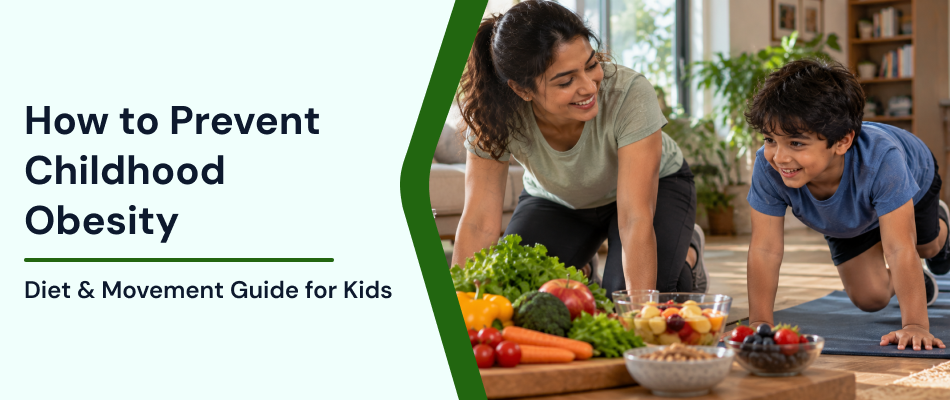
Childhood obesity is unfortunately becoming more common around the world. It is thus becoming an increasing concern for parents and health professionals everywhere.
The World Health Organization (WHO) estimates that in 2024, about 400 million children and teenagers aged 5 to 19 were living overweight, and about 170 million of them were obese. That is a big number, and hence it is important to understand how to prevent childhood obesity early.
Kids nutrition plays a central role here, because what children eat every day shapes their energy, growth and long-term health . It mostly comes down to everyday habits: what food is on the table, what children drink, how much they move and how well they sleep. The Institute of Nutrition and Fitness Sciences (INFS) promotes preventive health education that focuses on these simple, family-friendly habits.
What Does Childhood Obesity Mean?
Children are still growing, so their weight cannot be judged the same way as an adults. Doctors do not use adult BMI charts for children. Instead, they compare a childs BMI with other children of the same age and sex.
This means you should not decide that a child is overweight just by looking at their body or comparing them with friends. A paediatrician can check growth over time, along with eating habits and overall health.
A good plan overall should protect a childs confidence and avoid teasing or shame.
Healthy Eating Habits for Children
Children need enough food to grow well. A good kids nutrition plan focuses on balanced meals built mostly on real food.
Healthy eating habits for children include:
-
Vegetables and fruit at most meals, cut up so they are easy to grab
-
Whole grains such as roti, brown rice, oats or whole wheat bread
-
Dal, beans, chickpeas or other pulses
-
Eggs, fish, chicken, paneer, curd or milk, depending on your familys food habits
-
Nuts and seeds in small amounts, where suitable for their age
No meal has to be perfect. What matters most is the pattern across the whole week. Calling some foods "bad" often makes children more anxious about eating.
For more guidance, see this parent guide to healthy eating habits for kids.
- Make Water the Default Drink
Sugary drinks are one of the easiest things to reduce. Soft drinks, packaged juices and sweetened drinks add sugar without filling children up. Keep water within easy reach, and treat sugary drinks as occasional treats. Instead focus on fresh drinks like coconut water and home made lime juice with little or no sugar. - Avoid Unnecessary Restriction
Skipping meals or cutting out food groups can harm a growing child. Focus on occasional treats and try making healthy alternatives at home, which are made from real food and known ingredients.
Healthier Snacks and Alternatives to Junk Food
|
Instead of |
Try |
Why it helps |
|
Packaged chips (Lay’s, Kurkure) |
Roasted chana, makhana or air-popped popcorn |
More fibre and protein, less salt and oil |
|
Chocolate or sweets (mithai, candy) |
Dates with nuts, fresh fruit or a small square of dark chocolate |
Natural sweetness with fibre |
|
Soft drinks (Thums Up, cola) |
Lime juice with little sugar, coconut water or infused water |
Hydrates without added sugar |
|
Packaged biscuits and cookies |
Homemade ragi or oatmeal cookies, or whole-wheat crackers with hummus |
Made with whole grains and known ingredients |
|
Instant noodles (Maggi) |
Vegetable poha, upma or besan chilla, or a vegetable stir-fry with brown rice |
Whole-grain base with vegetables |
|
Fried street snacks |
Sprouts chaat, boiled corn or baked sweet potato wedges |
Lighter, fresh and filling |
|
Packaged fruit juice |
Whole guava, orange, apple or berries |
Keeps the fibre and has less sugar per serving |
|
Flavoured yoghurt |
Plain dahi or curd with fresh fruit, or plain Greek yoghurt |
Much less added sugar |
|
Sugary breakfast cereal |
Oats with milk and fruit, ragi malt or unsweetened Muesli |
Starts the day with fibre and steady energy |
Physical Activity Guidelines for Kids
Movement is very important in the holistic sense. It controls weight, builds strong bones and muscles, improves heart and lung fitness, supports brain health and lowers the risk of conditions like type 2 diabetes. Overall a physically active child also feels more energetic.
The WHO recommends that children and teenagers aged 5 to 17 get at least 60 minutes of moderate to vigorous activity each day. At least three of those days should include activities that make muscles and bones stronger, such as climbing, skipping or playing sports.
The 60 minutes do not have to happen all at once. Three 20-minute play sessions count. So do cycling to school, dancing at home and a game of tag in the park.
Keep it fun. Children who enjoy moving tend to keep moving all their life. Children who feel forced to exercise often stop as soon as they can.
Sleep and Screen Time Matter
Poor sleep is linked to unhealthy weight gain in children, and too much screen time is often linked to less sleep and less physical activity. Families who want to set sensible limits can read this guide on screen time for a child.
Do not, however, ban screens completely. Try these instead:
-
A regular bedtime and wake-up time
-
Screens switched off for an hour before bed
-
Family meals without phones at the table, when possible
-
Outdoor play, walks, reading or hobbies in place of some screen time: Introduce puzzles, other activities which make it fun for your child.
What Parents Should Avoid
Some approaches make things worse. Avoid:
-
Commenting on a childs body size or weight
-
Putting a child on a crash diet
-
Telling a child to skip meals
-
Using exercise as punishment for eating
Children learn how they feel about food and their bodies from the adults around them. Shame and pressure often lead to stress and low self-esteem. Calm, consistent habits work far better.
A Simple Family Routine
Start with a few steps the whole family can repeat:
-
Meals: Serve regular, balanced meals and snacks that suit your childs age and appetite.
-
Drinks: Keep water handy and make sugary drinks occasional.
-
Movement: Build walking, cycling, sports or dancing into the day.
-
Sleep: Keep a steady bedtime.
-
Home: Keep fruit and healthy snacks visible, and make active choices easy.
-
Example: Parents who eat well and stay active are the strongest role models.
Conclusion
Preventing childhood obesity comes down to everyday habits that support healthy growth for every child:
-
Serve real, balanced food with plenty of vegetables, fruit and pulses
-
Make water the everyday drink and keep sugary drinks occasional
-
Build daily movement into play, travel and family time
-
Protect regular sleep and keep screens in check
-
Create a home where nobody feels judged about their body
If your child already has excess weight or related health concerns, a check-up with a paediatrician and family-based support will give the best results.
To learn more, explore these courses:
-
Kids and Adolescent Nutrition for practical guidance on feeding children and teenagers well.
-
Basic Course in Nutrition and Fitness for a foundation in healthy eating and active living.
Disclaimer
The information in this blog is for general educational purposes only. It is not a substitute for professional medical advice, diagnosis or treatment. Always speak with a qualified paediatrician or healthcare professional before making changes to your child’s diet, physical activity or health routine, especially if your child has an existing medical condition, takes medicine or has concerns about growth or weight.
Frequently Asked Questions:
1. Why is childhood obesity a problem?
Childhood obesity can affect more than weight. It is linked to a higher risk of type 2 diabetes, high blood pressure, joint problems and sleep issues. It can also affect a child’s confidence and emotional wellbeing. Building healthy habits early is much easier than fixing problems later.
2. How to get a child to lose weight?
Do not start with a diet. The safest approach is to improve family habits together: more vegetables, water instead of sugary drinks, daily movement and better sleep. If you are concerned about your child’s weight, speak with a paediatrician, who can suggest a plan that suits your child’s age and growth.
3. At what age does childhood obesity start?
Childhood obesity can begin at any age, including the early years. Habits formed in childhood often continue into adulthood, which is why healthy routines matter from the start.
4. How much exercise should a child get every day?
Children and teenagers aged 5 to 17 should aim for at least 60 minutes of moderate to vigorous activity each day. At least three of those days should include activities that make muscles and bones stronger. Younger children should stay active and play throughout the day.
5. What is a healthy diet for children?
A healthy diet for children is balanced and built mostly on real food. Include vegetables, fruit, whole grains, pulses, eggs or fish, and dairy or fortified alternatives. Limit sugary drinks and highly processed snacks. Children do not need perfect meals every time. The pattern across the week matters most.
6. How much screen time is healthy for children?
Screen time should be limited so that children still have time for sleep, play and family meals. For children under 5, health guidelines suggest very limited screen time, with none recommended under age 2. For older children, set clear daily limits and keep screens out of the bedroom and off for an hour before bed.
7. Does poor sleep affect a child’s weight?
Yes. Children who do not get enough sleep are more likely to gain unhealthy weight over time. A regular bedtime and wake-up time help children sleep better, which supports healthy eating and energy levels during the day.
8. What should I do if my child’s doctor says they are overweight?
Stay calm and avoid blaming your child. Ask the doctor to explain the results and what they recommend. Most plans focus on family-wide habits, such as balanced meals, daily activity, water instead of sugary drinks and good sleep. Ask for regular follow-up so you can track progress together.
9. What are the main causes of child obesity?
Childhood obesity usually has several causes working together. The most common are eating more energy than the body needs, frequent sugary drinks and processed snacks, too little daily movement, and too much screen time. Poor sleep, stress and family eating habits also play a role. Genes and some medical conditions can affect weight too, which is why a doctor should review persistent weight gain.
10. What is the normal BMI for a toddler?
BMI for toddlers is not judged against adult numbers. Doctors compare a child’s BMI with growth charts for their age and sex. For children aged 2 to 5, a BMI between the 5th and 85th percentile is generally considered a healthy weight. A BMI at or above the 95th percentile is classed as obesity. Your child’s doctor can plot these numbers over time and explain what they mean for your child.
References
-
World Health Organization. Obesity and overweight. Geneva: WHO; 2026. https://www.who.int/en/news-room/fact-sheets/detail/obesity-and-overweight
-
World Health Organization. Healthy diet. Geneva: WHO; 2026. https://www.who.int/en/news-room/fact-sheets/detail/healthy-diet
-
World Health Organization. Physical activity. Geneva: WHO; 2026. https://www.who.int/initiatives/behealthy/physical-activity
-
Centers for Disease Control and Prevention. Preventing Childhood Obesity: 6 Things Families Can Do. Atlanta: CDC; 2026. https://www.cdc.gov/obesity/family-action/
-
Hampl SE, Hassink SG, Skinner AC, et al. Clinical Practice Guideline for the Evaluation and Treatment of Children and Adolescents With Obesity. Pediatrics. 2023;151(2):e2022060640. https://doi.org/10.1542/peds.2022-060640