
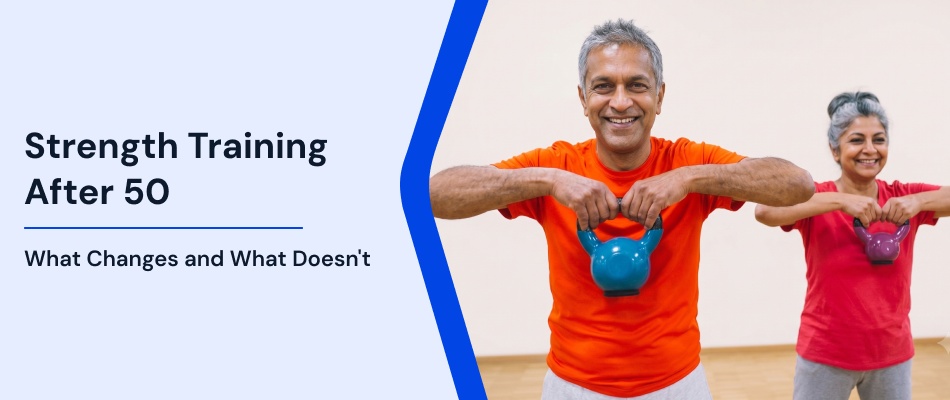
Your body changes as you age. Yet, your power to build strength stays strong. Starting around age thirty, you lose muscle mass. Most people lose 3% to 5% every decade. Doctors call this natural muscle loss, sarcopenia. Losing muscle mass starts slowly around age thirty and speeds up as you age.
At the Institute of Nutrition and Fitness Sciences (INFS), we focus on preventive health training. This approach helps you stop muscle loss early. You can protect your joints. You can keep your energy high. And, you can stay independent for life. This guide is a peek into what changes after fifty.
Understanding Age-Related Muscle Decline
Losing muscle weakens your lifts and also slows down your metabolism. Everyday chores start feeling harder. After fifty, you lose muscle mass quickly. You also lose explosive muscle power even faster.
Your body goes through the following shifts during this time:
- Loss of Type II Fibers: Type II muscle fibers give you speed and power. You lose these faster than your slow endurance fibers.
- Anabolic Resistance: Your cells react less to daily protein. You need higher quality protein doses to grow muscle tissue.
- Lower Hormones: Drops in growth hormone and testosterone slow down tissue repair.
- Chronic Inflammation: Low-grade swelling interferes with normal muscle signals. It delays your body from recovering fully.
You lose physical strength faster than your muscle mass. Without exercise, this loss weakens your joints. It limits how well you move. That is why it is better to start a preventive health training routine as early as possible.
How To Build Muscle After 50?
Let’s understand what stays the same and what changes.
Your muscles still grow through progressive tension. Lifting weights creates tiny micro-tears in your muscle fibers. Your body repairs those fibers. They grow thicker and stronger over time. That core process works at any age.
However, your recovery time increases. Your tendons and ligaments need extra time to bounce back. Your nervous system needs more rest between hard workouts.
Fitness tips for over 50 individuals:
- Focus on Muscle Strain:
Muscles respond to safe tension. You do not need crushing weight on your spine. Use controlled speeds to work the target muscle. - Hit Your Protein Target: You must beat anabolic resistance. Eat protein rich in leucine to start muscle repair.
- Check Your Daily Energy: Recovery varies each day. Sleep, stress, and joint aches matter. Adjust your weights based on how you feel each morning.
Preventing Muscle Loss with Age
It is always better to start taking care of your body early. Most people know that they need to exercise. Yet, planning the right workout can feel tough. Many adults over fifty make two main mistakes. 1) They stick to light cardio that never builds muscle or, 2)They copy intense workouts made for college athletes.
Standard gym plans often ignore stiff joints. They ignore slower recovery times too. You do not need to lift painful weights to see results. Instead focus on the quality of your movement. Move with control. Take longer breaks. And lift with clear focus on targeted areas.
Exercise and Dietary Adjustments
While carrying out resistance training for aging adults it is also important to tweak your weekly schedule.
Managing Workout Days
You might ask yourself: How often should a 50 year old strength train? Two or three full-body sessions per week work best. Split your routines between upper and lower body days. This schedule gives your joints 40 to 72 hours of rest between sessions.
Eating To Recover
Wondering what is the best protein to build muscle after 50?It is easy! You should often pick fast-digesting options. Whey protein, eggs, lean poultry, and Greek yogurt are great choices. Aim for 30 to 40 grams of protein per meal to trigger muscle growth.
Having A Joint-Friendly Workout Setup
If your joints ache, try safe gym workout for older adults:
- Cable Machines: Cables keep steady pressure on your muscles. They keep your paths smooth and safe.
- Resistance Bands: Bands offer smooth resistance that matches your natural force. They take stress off your joints.
- Bodyweight Exercises: Moves like wall push-ups and step-ups build core balance without heavy spinal pressure.
Conclusion
Your body goes through real changes over time. Yet, your power to adapt never stops. Adjust your workout volume. Eat enough protein. Focus on clean movement patterns. Doing these things builds lasting strength for life. Structured training turns aging into a journey of health and progress.
Take charge of your health journey today.
Want to learn more about exercise science? Read our guide on Evidence-Based Health Preventive Health Science. You can also explore how to design safe routines in our Diploma in Personal Training Course.
Frequently Asked Questions (FAQs)
1: Is lifting heavy weights safe after age 50?
Yes. You must master your form first. Increase your weight slowly over time. Lifting moderate weights keeps your bones dense. It protects your fast-twitch muscle fibers too.
2: What are the primary benefits of strength training for mature adults?
The main benefits of strength training include bigger muscles, stronger bones, and stable joints. It improves your blood sugar and balance too.
3: How do I prevent joint pain while strength training?
Warm up before every session. Use neutral grips on bars. Move with slow control. Pick exercises that fit your body type.
4: Can women build muscle after menopause?
Yes. Estrogen drops slow tissue repair down. Yet, regular lifting and protein still drive steady muscle growth in post-menopausal women.
5 : How many sets and reps are optimal for building muscle after 50?
Do 6 to 12 reps per set. Stop each set when you feel you have 2 or 3 reps left in reserve.
6 : What are the best practical fitness tips for mature beginners?
Start with basic moves like goblet squats. Focus on form. Sleep well. Eat enough protein. Stay consistent every week.
7 : Should I do cardio or strength training first?
Do strength training first while your brain and muscles feel fresh. Do your cardio at the end. Or save cardio for your off days.
8 : How long does it take to see visible muscle gains after 50?
You will feel stronger in three to four weeks as your nerves adapt. Visible muscle changes usually show up in eight to twelve weeks.
9 : Do I need supplements to build muscle at this age?
Supplements are not mandatory. Whey protein helps you hit daily targets. Creatine monohydrate supports muscle power whenever needed.
10 : How do I know if I am overtraining?
Watch for warning signs. These include joint aches, bad sleep, low energy, or muscle soreness lasting more than three days.
Disclaimer
This article is for educational purposes only and should not replace professional medical advice. Always consult a qualified healthcare provider or certified nutrition specialist before making significant changes to your diet, exercise routine, or health practices.
Reference Sources
CDC: Physical Activity Guidelines for Older Adults
National Institutes of Health: Sarcopenia Research & Interventions
Journal of Applied Physiology: Anabolic Resistance in Aging Muscle
World Health Organization: Global Recommendations on Physical Activity for Health