
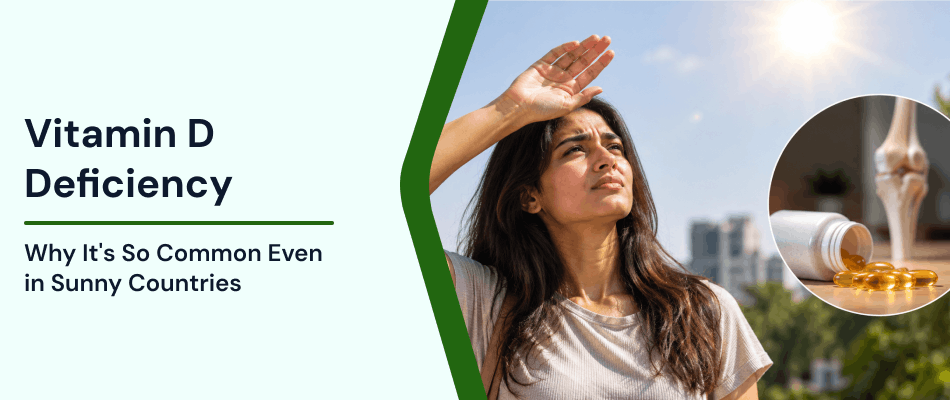
You live in a warm, sunny climate. You spend time outdoors. Yet your blood test shows low vitamin D.
Sounds contradictory, right ? But vitamin D deficiency in sunny climates is actually common. In fact, the presence of sunlight does not guarantee adequate vitamin D production.
The Institute of Nutrition and Fitness Sciences (INFS) focuses on preventive health education. This blog explores vitamin D deficiency causes using evidence based nutrition course principles to help you understand why deficiency is common even in sunny climates.
What Is Vitamin D and Why Does It Matter?
Vitamin D is a fat-soluble hormone that regulates calcium and phosphate metabolism. Your body uses it for:
- Intestinal calcium absorption
- Bone mineralization
- Neuromuscular function
- Skeletal growth
- Immune function
How does Body Produce Vitamin D?
Your skin produces vitamin D when ultraviolet B (UVB) radiation converts 7-dehydrocholesterol into vitamin D3. Your liver and kidneys then convert it into the active form used by your body. Healthcare providers measure vitamin D status using serum 25(OH)D, the principal biomarker that reflects vitamin D obtained from sunlight and dietary sources. Blood tests quantify these levels to determine your status.
What Happens When Vitamin D Is Deficient?
Severe deficiency causes rickets in children and osteomalacia (soft bones) in adults. Less severe deficiency can cause secondary hyperparathyroidism, reduced bone mineral density, muscle weakness, and increased risk of falls. Early detection through blood testing prevents these serious complications.
Sunshine Does Not Guarantee Vitamin D Sufficiency
Abundant sunlight outside does not guarantee your body is producing Vitamin D. Biological synthesis depends on several variables, including solar intensity, exposure duration, time of day, season, skin pigmentation, age, and sunscreen habits.
Beyond biology, daily habits play a major role. Many people living in warm climates remain indoors in air-conditioned homes, offices, or schools to avoid extreme heat. Dense urban settings with tall buildings block direct rays, leaving many tropical residents with virtually zero meaningful UVB exposure during peak hours.
Vitamin D Deficiency Causes: Why You Might Be Deficient Despite Sun
Cause 1: Skin Pigmentation
Understanding Melanin and Vitamin D Absorption Rate
Melanin provides natural protection against ultraviolet radiation but reduces vitamin D synthesis efficiency. People with darker skin require longer sun exposure to produce the same amount of vitamin D as people with lighter skin under identical conditions.
The 3-6x Factor
Some people need 3-6 times longer in the sun to produce the same vitamin D as others. This depends on melanin concentration in the skin. Humans adapted to different UV radiation levels in ancestral environments. In modern settings, this adaptation affects vitamin D production.
Why Sunny Climates Can Still Lead to Deficiency
Causes of vitamin d deficiency despite sun exposure include:
- Reduced synthesis efficiency due to melanin concentration
- Behavioural factors like spending more time indoors in hot climates (heat avoidance)
- Urban indoor occupations with limited outdoor exposure
- Protective clothing practices
Cause 2: Age
Older skin has reduced concentration of 7-dehydrocholesterol (the compound that converts to vitamin D with sun exposure) and produces vitamin D less efficiently. Older adults also often spend less time outdoors, have limited mobility, or live in institutional settings that reduce sunlight exposure. Elderly populations remain vulnerable even in regions with intense solar radiation.
Cause 3: Clothing Culture and Sun Avoidance
Cultural clothing practices and sun-avoidance behaviours significantly reduce UVB exposure. Many populations also avoid sunlight due to concerns about heat, tanning, aging, or skin cancer. Sunscreen and protective clothing reduce UVB penetration and protect from excessive exposure. However, when nearly all daylight is avoided and vitamin D intake is low, these behaviours contribute to deficiency.
Finding Balance
However, balance is essential. Allow 10-15 minutes of unprotected midday sun several times weekly.
Cause 4: Air Pollution
Air pollution alters UVB radiation before it reaches the ground. Particulate matter, smog, and atmospheric pollutants reduce the amount of UVB available for skin synthesis, especially in heavily polluted urban environments. This is particularly relevant in rapidly urbanizing regions where air pollution coincides with indoor occupations.
Cause 5: Diet and Food Fortification
When sunlight exposure is limited, dietary intake becomes critical. Natural food sources of vitamin D are relatively few. Many diets, especially those low in fish and animal foods, provide insufficient vitamin D without fortified products or supplements ( to be taken in consultation with a health practitioner)
The Paradox
Sunny countries often lack systematic food fortification and have diets low in vitamin D foods. Meanwhile, cold-climate countries with less sunlight typically have lower deficiency rates because they prioritize food fortification and supplement use. This shows why latitude alone is an inadequate predictor of vitamin D status.
Cause 6: Obesity and Chronic Disease
Vitamin D dissolves in body fat. Extra body fat acts like a sponge. It pulls vitamin D out of your blood and traps it. This leaves less vitamin D available for your body to use.
Thus, weight management and diet planning with adequate protein, fiber, and healthy fats improves both weight and vitamin D status.
Nutrition for gut health and digestion enhances overall nutrient absorption. Medical conditions (celiac disease, inflammatory bowel disease, liver/kidney disease, malabsorption) and certain medications (antiepileptic drugs, glucocorticoids) also impair vitamin D metabolism.
Symptoms of Low Vitamin D
Mild deficiency may cause no obvious symptoms. As deficiency worsens, symptoms of low vitamin D may include:
- Fatigue and tiredness
- Muscle weakness and aches
- Bone pain
- Mood changes or depression
- Frequent infections (due to immune dysfunction)
- Slow wound healing
- Hair loss
Severe deficiency causes rickets (children) or osteomalacia (adults) with softening bones and skeletal deformities.
How Much Sun Exposure for Vitamin D?
Ideal sun exposure varies based on individual skin pigmentation, time of day, and environmental conditions.
General Guidelines:
- Skin with Lower Melanin Levels: 10–30 minutes of direct midday sun exposure several times per week on exposed skin (arms, legs, face) is typically sufficient.
- Skin with Higher Melanin Levels: May require up to 3 to 6 times longer exposure under identical solar conditions, as natural melanin acts as a protective shield that absorbs UVB radiation.
Key Factors to Keep in Mind:
- Peak Timing: Midday sunlight delivers the strongest UVB rays needed for Vitamin D synthesis.
- Atmospheric Blockers: Air pollution, smog, heavy cloud cover, and window glass significantly reduce the UVB rays that reach the skin.
Vitamin D Absorption Factors and How to Improve Status
Factors affecting vitamin D absorption:
- Dietary fat intake (vitamin D is fat-soluble; requires fat for absorption)
- Nutrition for gut health and digestion (gastrointestinal health directly impacts nutrient absorption, including vitamin D)
- Liver and kidney function (needed to activate vitamin D)
- Age (absorption efficiency declines)
- Medications (some interfere with activation)
- Body weight (obesity reduces circulating levels)
These complex absorption factors and much more is taught comprehensively in professional health and fitness certifications and clinical nutrition certification online programs. This also highlights why personalized assessment matters more than generic supplementation advice.
How to improve vitamin D absorption :
Strategy 1: Increase sun exposure
- Spend 10-30 minutes outdoors at midday several times per week
- Expose arms, legs, or back to direct sun
- Balance sun exposure with skin cancer prevention
Strategy 2: Eat more vitamin D foods
- Fatty fish (salmon, mackerel, sardines)
- Fish liver oils
- Egg yolks
- Fortified milk or plant-based milk alternatives
- Fortified orange juice
- Mushrooms exposed to sunlight
Strategy 3: Use supplements
- Vitamin D2 or D3 supplements
- Typical doses range from 800-2000 IU daily for maintenance
- Higher doses may be needed for deficiency correction (consult healthcare provider)
Strategy 4: Eat healthy fats with your meals
- Your body needs fat to absorb vitamin D from food.
- Pair vitamin D foods with healthy fats like nuts, seeds, avocado, or olive oil.
- Softgel pills already contain oil inside. You do not need extra fat when taking softgel supplements.
Strategy 5: Maintain healthy weight
- Obesity reduces circulating vitamin D levels
- Implement weight management and diet planning to support both healthy weight and vitamin D status
- Weight loss improves vitamin D levels
Strategy 6: Address underlying conditions
- Treat malabsorption disorders
- Monitor kidney and liver function
- Review medications with healthcare provider
Key Takeaways
- Vitamin D deficiency in sunny climates is common due to indoor lifestyles, clothing, air pollution, and diet, not just lack of sun
- Causes of vitamin d deficiency despite sun exposure include dark skin pigmentation, obesity, chronic disease, and poor food fortification
- Melanin and vitamin d absorption rate differences mean darker skin requires 3-6 times longer sun exposure
- Sunshine availability does not equal effective UVB exposure; multiple factors affect vitamin D production
- Nutrition for gut health and digestion and weight management and diet planning directly impact vitamin D absorption
- Supplementation and regular blood tests are often necessary
Learn More About Vitamin D and Preventive Health
Explore INFSs preventive health education programs:
Certified Nutritionist Course: Understand vitamin D, dietary sources, and absorption factors. Learn nutrition for gut health and digestion to optimize nutrient absorption.
Principles of Diagnostics in Preventive Healthcare: Assess vitamin D status and interpret blood tests.
Visit infs.com/courses today.
Frequently Asked Questions
- Why is my vitamin D low despite being in the sun?
Causes of vitamin d deficiency despite sun exposure include indoor lifestyles, dark skin pigmentation (based on individual melanin and vitamin d absorption rate), protective clothing, air pollution, poor diet, obesity, chronic disease, or medications. Sun exposure alone is insufficient without considering all these factors.
- Does sunscreen block vitamin D synthesis?
Yes,sunscreen with SPF 15+ blocks ~93% of UVB radiation. However, this protection prevents skin cancer and aging. Balance is key: use sunscreen for extended time, but allow 10-15 minutes of unprotected midday sun several times weekly and prioritize dietary vitamin D sources.
- What drains vitamin D from your body?
Obesity, malabsorption disorders (celiac disease, inflammatory bowel disease), chronic kidney or liver disease, certain medications (antiepileptic drugs, glucocorticoids), limited sun exposure, low dietary intake, and aging all reduce vitamin D production, absorption, or activation.
- How long does it take to correct vitamin D deficiency?
Reaching a stable blood concentration typically takes 8 to 12 weeks of daily supplementation (1,000–2,000 IU). Severe clinical deficiencies often require physician-supervised high-dose loading therapy (e.g., 50,000 IU weekly for 8 weeks) followed by daily maintenance . Always consult with a doctor or health practitioner.
- Can you get too much vitamin D from sun exposure?
No. The skin naturally regulates synthesis through photolysis, converting excess previtamin D3 into harmless, inactive photoproducts (such as lumisterol and tachysterol). Vitamin D toxicity only occurs from excessive oral supplementation
- Do I need vitamin D supplements if I live in a sunny country?
Not necessarily. If you have adequate outdoor sun exposure, eat vitamin D foods regularly, and have normal weight and gastrointestinal health, you may not need supplements. Blood testing determines your actual status. Supplementation is appropriate if deficiency or risk factors exist.
- Is vitamin D deficiency serious?
Mild to moderate deficiency causes fatigue or muscle aches. Severe, prolonged deficiency causes rickets (children) or osteomalacia (adults) with weak bones and fractures. Secondary hyperparathyroidism increases fracture risk. Early detection and correction prevent serious complications.
Disclaimer
This article is educational only and should not replace professional medical advice. Vitamin D assessment requires blood testing. Always consult a healthcare provider before starting supplements, especially if you have medical conditions or take medications. Vitamin D toxicity can occur from excessive supplementation. Individual needs vary based on age, skin pigmentation, and medical history. The information on this website is provided for general educational purposes only and is not a substitute for professional medical, health, or nutritional advice.
References
Holick MF. Vitamin D deficiency. New England Journal of Medicine. 2007;357(3):266-281. https://pubmed.ncbi.nlm.nih.gov/
Wacker M, Holick MF. Sunlight and Vitamin D: A global perspective for health. Dermato-Endocrinology. 2013;5(1):51-108. https://pubmed.ncbi.nlm.nih.gov/
Cashman KD, Dowling KG, Skrabakova Z, et al. Vitamin D deficiency in Europe: pandemic? American Journal of Clinical Nutrition
Munns CF, Shaw N, Kiely M, et al. Global Consensus Recommendations on Prevention and Management of Nutritional Rickets. Journal of Clinical Endocrinology & Metabolism.
Nair R, Maseeh A. Vitamin D: The "sunshine" vitamin. Journal of Pharmacology and Pharmacotherapeutics.